The short note
Site search, lease negotiation, systems verification and budgeting can partly run in parallel. What can't wait is this: before a signature or an order you can't easily undo, confirm the use conditions, costs, responsibilities and deadlines that decide it. Open the contract first and the rent and the TI number become your yardstick — before anyone can tell you whether that number is enough.
Suppose you add a fryer. The design team may need to revisit the hood and gas supply. If an upgrade is needed, ask the contractor about price and timing and the landlord about permission for roof work. One menu decision changes the questions you take to each person.
What to check
1. Is your menu actually allowed at this address?
Fix your menu, cooking methods, seat count, delivery, alcohol and hours on one page first. Then get two separate answers against it: the permitted-use language in the lease, and zoning, building and health confirmation for that exact address. Ask about parking counts and access at the same time — they can affect whether the use is approvable.
2. Will the power, gas and water carry your equipment?
Build the equipment list, then pull voltage, phase, connected load, gas input and water and drain requirements from the manufacturers' spec sheets. Match that against the existing service rating, meter and hot-water capacity using actual records. Don't calculate spare capacity from a panel label or a count of empty breakers. This one gets decided by your MEP engineer and the utility, not by you.
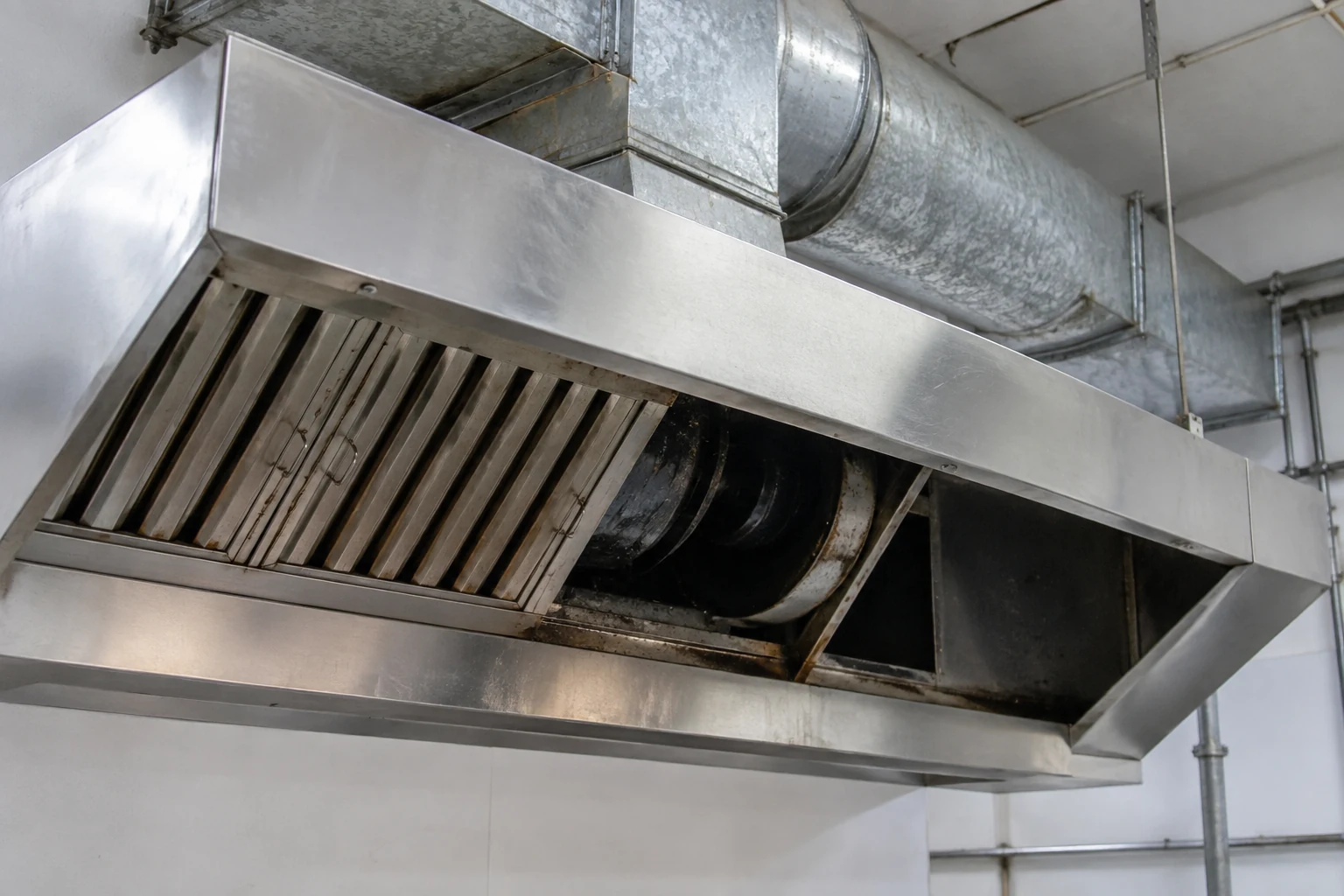
3. Do the hood, make-up air, suppression and grease fit your line?
A hood is sized around which cooking equipment sits where. Looking at the hood body alone leaves out duct, make-up air, electrical, roof work and waterproofing. For grease, confirm location, capacity, access and who maintains it — and confirm the sizing standard with the local sewer or pretreatment authority.
4. How long do design, permits and construction actually take?
If service has to be upgraded, the cost and the calendar usually grow because of permitting, utility coordination and roof or slab restoration — not because of the equipment price. Split design, permitting, utility changes, installation, restoration and testing between the parties up front, or you'll end up with a scope gap nobody owns.
5. Have you converted the lease terms into cash and dates?
Write base rent and additional rent (CAM, taxes, insurance and the rest) on separate lines. Convert TI from a headline number into what you pay out first and when the money actually arrives. Check whether free rent abates base rent only or additional rent too. Then put delivery, lease start and rent commencement on a single timeline.
Why it matters
Put an expected reply date beside each open question. Until the utility review comes back, the related construction cost and opening date are estimates.
For example, the landlord’s allowance might look generous, but the utility’s response could arrive after the due-diligence deadline. Ask your attorney about an extension or other lease terms while there is still time.
If TI is paid as a reimbursement after completion, it isn't start-up capital. You spend the construction money first and get paid once the documentation is approved, so your final net cost and your peak cash requirement can be very different numbers. "Three months free" works the same way: if you don't separate what's abated from what you keep paying, you'll find a month where the opening budget is short.
Questions to ask
Ask them in that order. When answers come back, check whether "yes" is backed by a document, an agency or a professional review.
Landlord / Broker
- Is the rent quoted per square foot per year or as a flat monthly amount? Can you send the escalation schedule too?
- What's included in additional rent — CAM, taxes, insurance, management fees — and how is it reconciled?
- Which costs are TI-eligible? Does that include design fees, permit fees and equipment? What's the claim deadline, the required documentation and the payment timing?
- Is TI reimbursed after completion, or funded as construction progresses?
- During the free-rent period, which charges do I still pay?
- What condition is the space delivered in, and if delivery slips, does rent commencement move with it?
MEP engineer / electric and gas utility
- Based on this equipment list, is the existing electrical service adequate? What information are you missing to say?
- What is the current service capacity at this address, and how long does an upgrade typically take once it's requested?
- Can the gas meter and piping carry the total input of this cook line, or does the pressure and piping need a separate review?
- Will the hot-water capacity cover peak demand from the dish machine and sinks?
An allowance is a provisional amount the contract sets aside for a specific item whose final selection, quantity or scope has not been settled yet. Keep it separate from a general construction contingency, and confirm what it covers and how it gets reconciled.
Architect / General contractor
- What else do you need before you can draw this space? Can you list what you can't determine yet?
- If the service has to be upgraded, who handles design, permitting, the utility change, installation, restoration and testing?
- What's excluded from the bid, and what's carried as an allowance? For each allowance, what does it cover and how is it reconciled?
- On the current schedule, which work actually stops if a decision is late?
Attorney
- How are the due-diligence period, the notice requirements and any extension written in this draft?
- What moves the rent commencement date, and what happens if landlord work runs late?
- Are there circumstances where the abatement or the TI can be clawed back?
Before you sign
Before you sign, get all five lines onto the same page. In each line, write who confirmed it and when — not just the answer.
- Use — lease language and agency confirmation obtained separately, with the name and date recorded.
- Utilities — equipment specs and existing service records sitting on the same line, with the gaps marked.
- Hood and grease — sorted by a professional into reuse, modify, replace or unverified.
- Schedule and cost — if an upgrade is needed, permitting, utility coordination and restoration are in the duration.
- Lease terms — base and additional rent separated; TI outlay, TI payment date and rent commencement on one timeline.
Start with the unanswered item most likely to change the price, schedule or decision to sign. Record who can answer and by when. Decide what you will do if the answer misses your deadline.