The short note
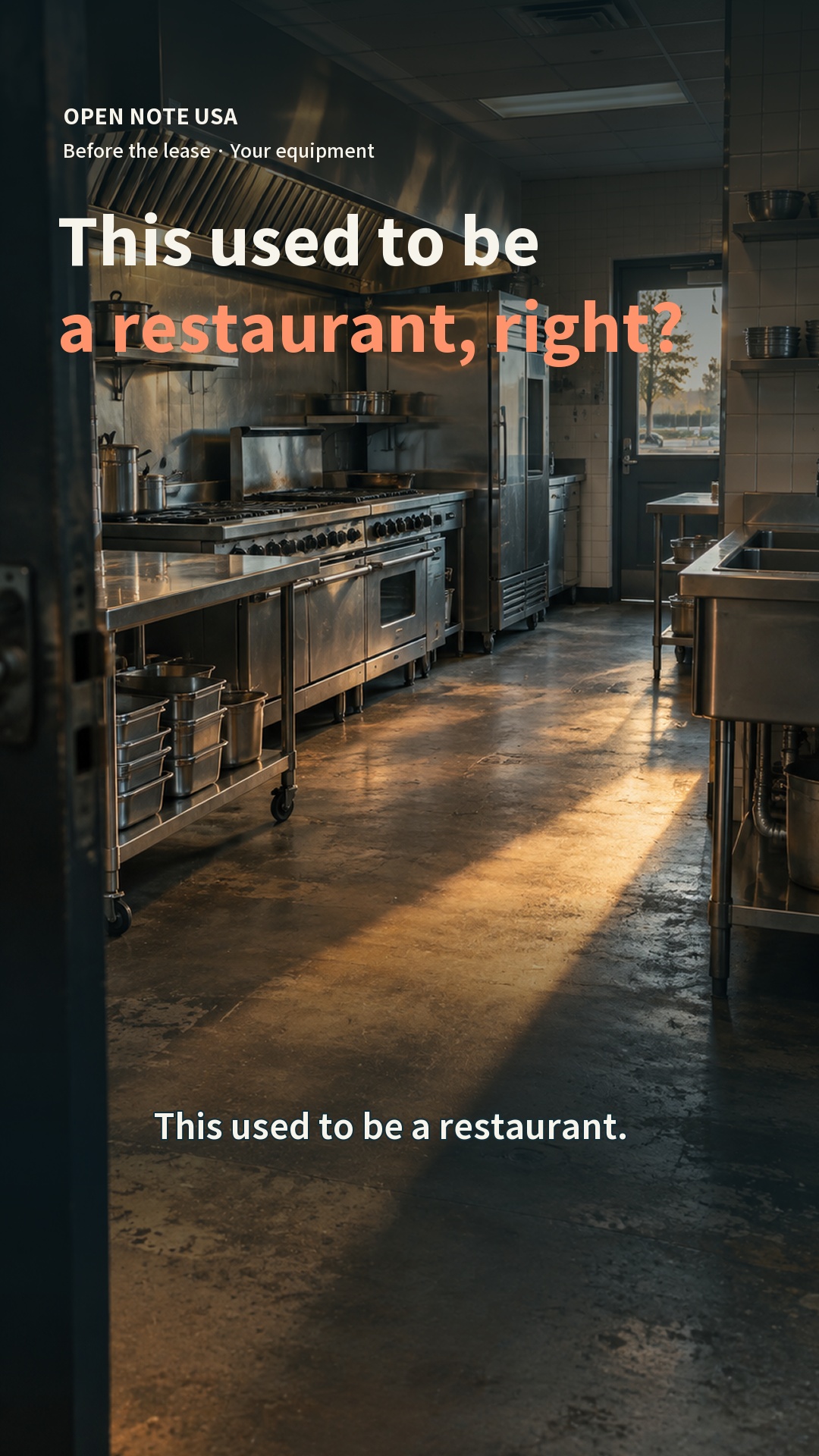
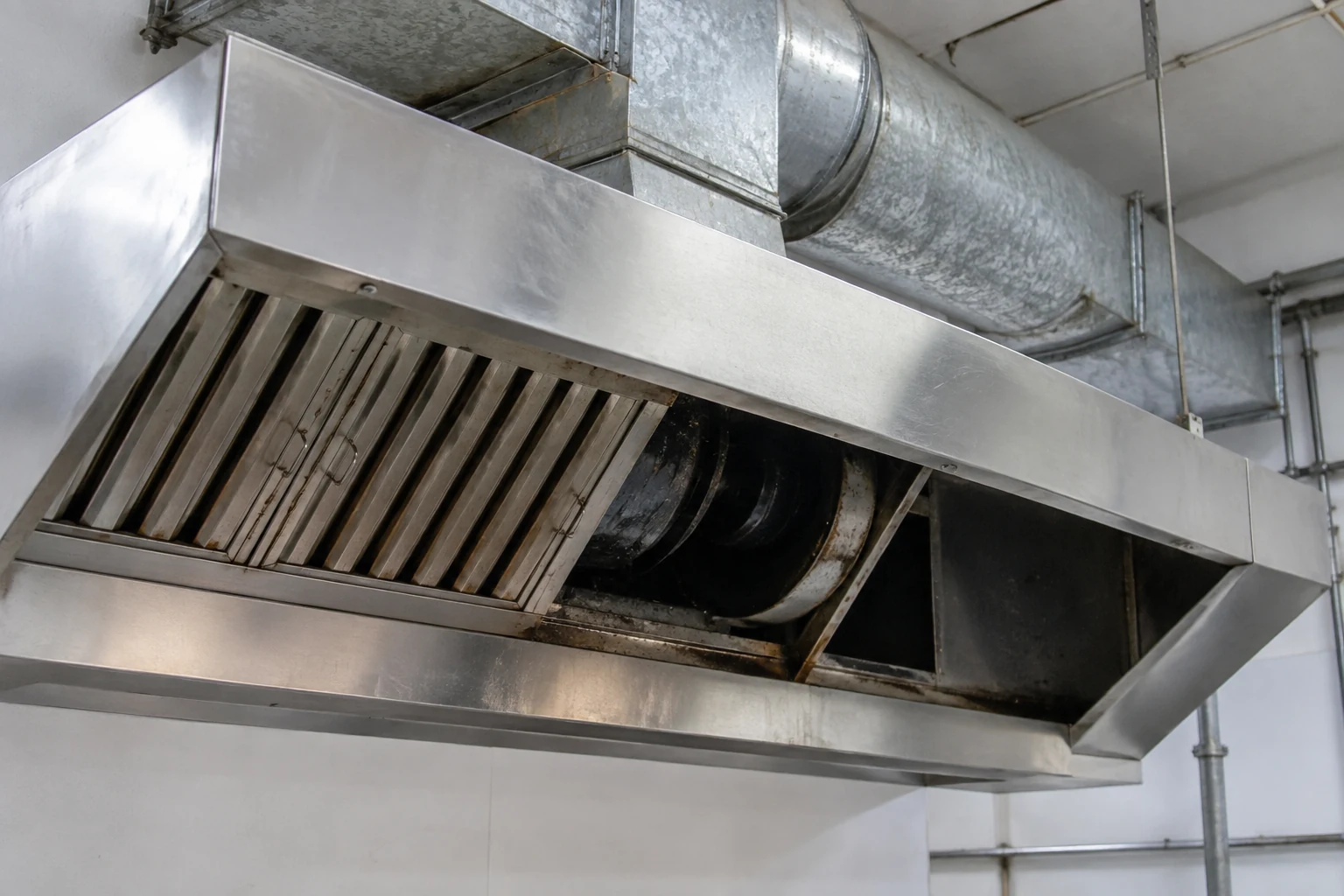
A hood and a walk-in cooler are still in the kitchen. Before taking either out of the budget, ask the landlord what comes with the lease and give your design team the menu and equipment list.
With a walk-in cooler, the insulated box and door may be there. Does the refrigeration unit come with it, and has anyone tested it? A hood needs its own check against the appliances you intend to put under it.
Mark the item unverified until the right specialist can say whether to reuse, modify or replace it. For a modification, ask about removal, connections and restoration, and account for rent due during the work.
What to check
Sort everything that's left into one of four buckets: reuse, modify, replace or unverified. Before you book "it's already here" as a saving, price the modification, removal and replacement next to it.
- Hood and make-up air — check the hood's length and type against your new equipment layout. Looking at the hood body alone leaves out duct, make-up air, electrical, roof work and waterproofing.
- Fire suppression — a current service tag and approval for your equipment layout are two different things. Nozzle placement gets reviewed against where your appliances actually sit.
- Grease and sewer — confirm the interceptor's location, capacity, access and who maintains it. An existing trap isn't settled until someone confirms it suits your menu and fixture count. It's not unusual for no one to know where it is.
- Drains and floor — floor sink and drain locations drive the kitchen layout. Running new lines to new equipment can bring slab cutting and concrete and finish restoration with it.
- Restrooms and access — existing restrooms can still require ADA-related work depending on dimensions, the accessible route and your seat count. Don't judge compliance from photos; send it to your architect as a question.
- Refrigeration and HVAC — a walk-in that's running and cold tells you nothing about its condition, capacity or warranty. Collect the nameplate, service records, condensing unit, drain and door condition together.
- Ownership and responsibility — find out whether the remaining equipment belongs to the landlord, the previous tenant, or comes with the lease. If the space is delivered as-is, find the clause that says who repairs, replaces and restores what after you take it.
Why it matters
A hood is sized around which appliances sit where, and grease capacity follows the local sewer and pretreatment standard. Both were installed for someone else's menu. Change the menu and you change the basis. A missing item or a difference in scope can surface while you compare bids, during design review, during construction, or at inspection. The later it surfaces, the more it affects work already done and the schedule that follows.
Connections can change the scope. A change to exhaust may affect make-up air and roof waterproofing. Moving a drain may require opening and restoring the floor. Ask which of those tasks the quote covers.
Rent may start under the lease while you wait for a technical review. Put the expected response date beside the due-diligence deadline and first rent payment to see which answer you need first.
Questions to ask
Organize the photos before you send the questions and the answers come back far more specific. For each item, send four things under one ID: a wide shot, the connections, a readable label, and one line describing what the photos can't tell you.
Landlord / Property manager
- Of the equipment still in the space, what belongs to the building and what belongs to the previous tenant? What comes with the lease?
- Can I get the location and capacity records for the grease interceptor, along with recent cleaning records?
- Do you have service records for the hood and the fire suppression system, and when was the last inspection?
- If this is delivered as-is, who is responsible for failures and leaks discovered after I take possession? What are my restoration obligations at the end of the term?
- Is there any record showing that the previous build-out was permitted?
Architect / MEP engineer
- Based on the photos and equipment list I sent, would you call each item reuse, modify, replace or unverified?
- Do the existing drain locations force changes to my kitchen layout? Where would we need to cut the slab?
- Could the existing restrooms and accessible route trigger additional work at my seat count?
- What records or site investigation would you need to finish the assessment?
Hood / fire suppression / plumbing contractor
- Does this hood's length and exhaust capacity suit my equipment layout? If not, is that a modification or a replacement?
- Does the suppression system need new nozzle placement for my layout?
- What would you need to determine whether the existing grease interceptor suits my menu and fixture count, and where do I confirm the local standard?
An allowance is a provisional amount the contract sets aside for a specific item whose final selection, quantity or scope has not been settled yet. Keep it separate from a general construction contingency, and confirm what it covers and how it gets reconciled.
General contractor
- Does the bid include demolition and disposal, slab restoration and waterproofing at roof penetrations — or are those excluded?
- Which items are carried as allowances, what does each one cover, and how is it reconciled? When do those become real numbers?
- If we plan to keep an existing system and it gets flagged at inspection, what happens to the schedule and the cost?
Your next step
Before any of this goes into the budget as a saving, build one four-column table.
- Mark every item reuse, modify, replace or unverified. Get the call from a professional, and where there isn't one, leave it unverified.
- In the unverified column, write the person who will confirm it and the date you expect them — not a dollar figure. Recording what you don't know is a real due-diligence result.
- When a saving does go into the budget, put the modification, demolition and restoration work — and the time to confirm it — on the same line.
- Send photos grouped under one ID per item: wide, connections, label, question. Leave anything you couldn't safely reach marked as no access.
- If a connection or upgrade has no one assigned to it, assign it before you order equipment or sign anything.
A second-generation space really can come in cheap. But the answer comes from the verification, not from the equipment that happens to still be there.