The short note
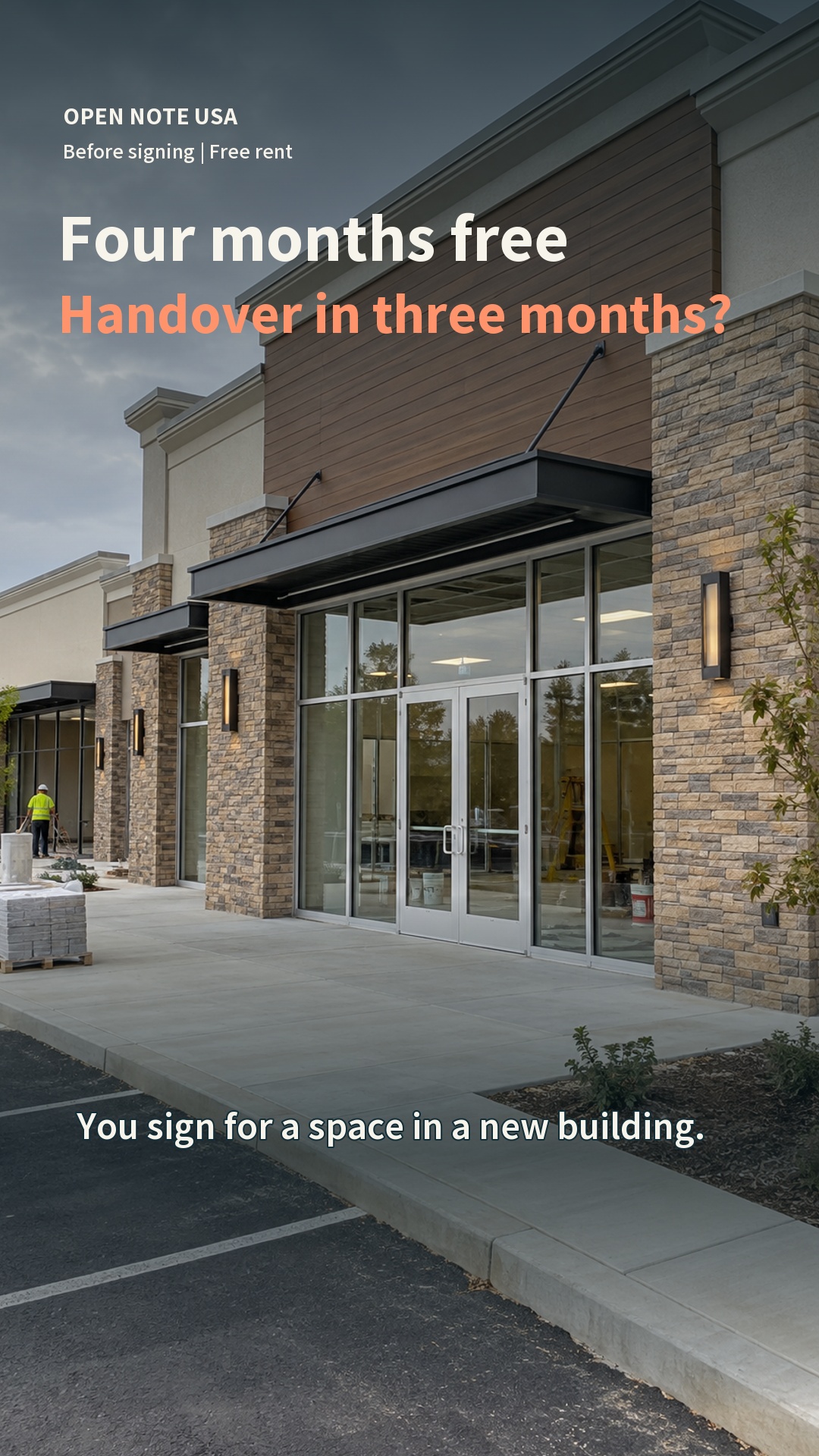
Imagine signing for a new storefront with four months of free rent, while handover is expected three months later. Does the concession run while you wait? A new building does not answer that question. The lease needs to identify the trigger.
What to check
- Signing and lease commencement: find whether these are the same date or depend on different conditions.
- Handover and delivery condition: identify work or utilities the landlord must provide, beyond giving you a key. Ask who records acceptance of the delivery condition.
- Concession dates and first bill: locate the start, end and first payment date. Check whether only base rent is waived.
- Delays: distinguish late delivery, permit delays and delays in your own work. Ask which events change the dates and whether notice or another agreement is required.
Why it matters
For illustration, suppose a lease waives base rent for four months after delivery. If preparation uses three of those months, roughly one month remains after opening. That calculation only works with that trigger. A construction delay does not by itself establish an extension.
NYC’s commercial leasing guide discusses rent abatement during preparation as a negotiation topic. It is a New York City reference, not a determination of your lease rights elsewhere.
Reference: NYC Small Business Services — commercial leasing and rent abatement
Questions to ask
Ask the landlord and your lease adviser
- What exact event starts the concession under this clause?
- If delivery is late, which dates change: handover, the concession end or the first bill?
- Which charges remain payable during the concession, and what is the expected first payment?
Before you sign
Mark the handover, the event that starts the concession and the first rent payment on one calendar. Ask your lease adviser which dates move if delivery slips. Keep a separate line for charges still due during the concession.