The short note
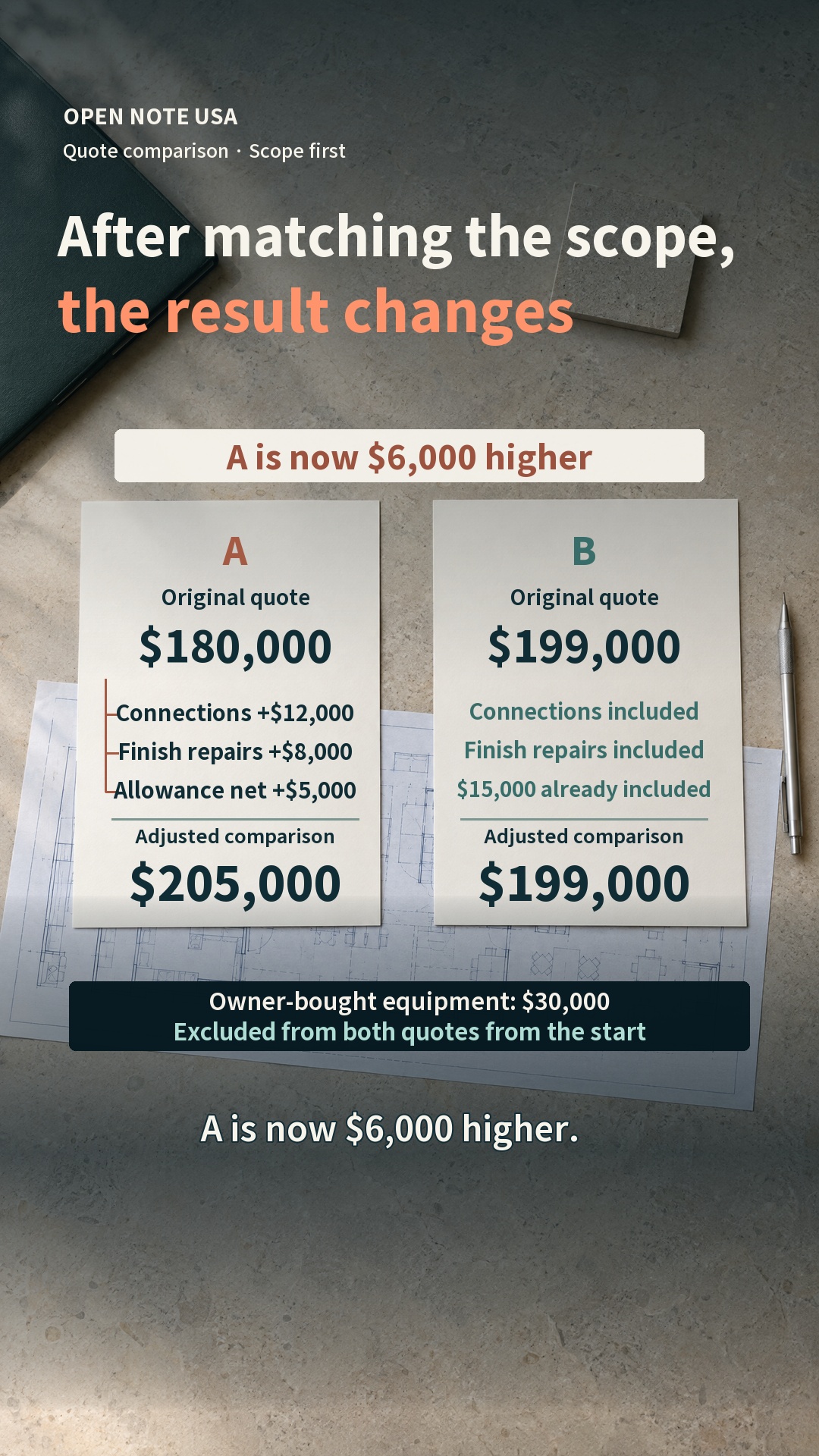
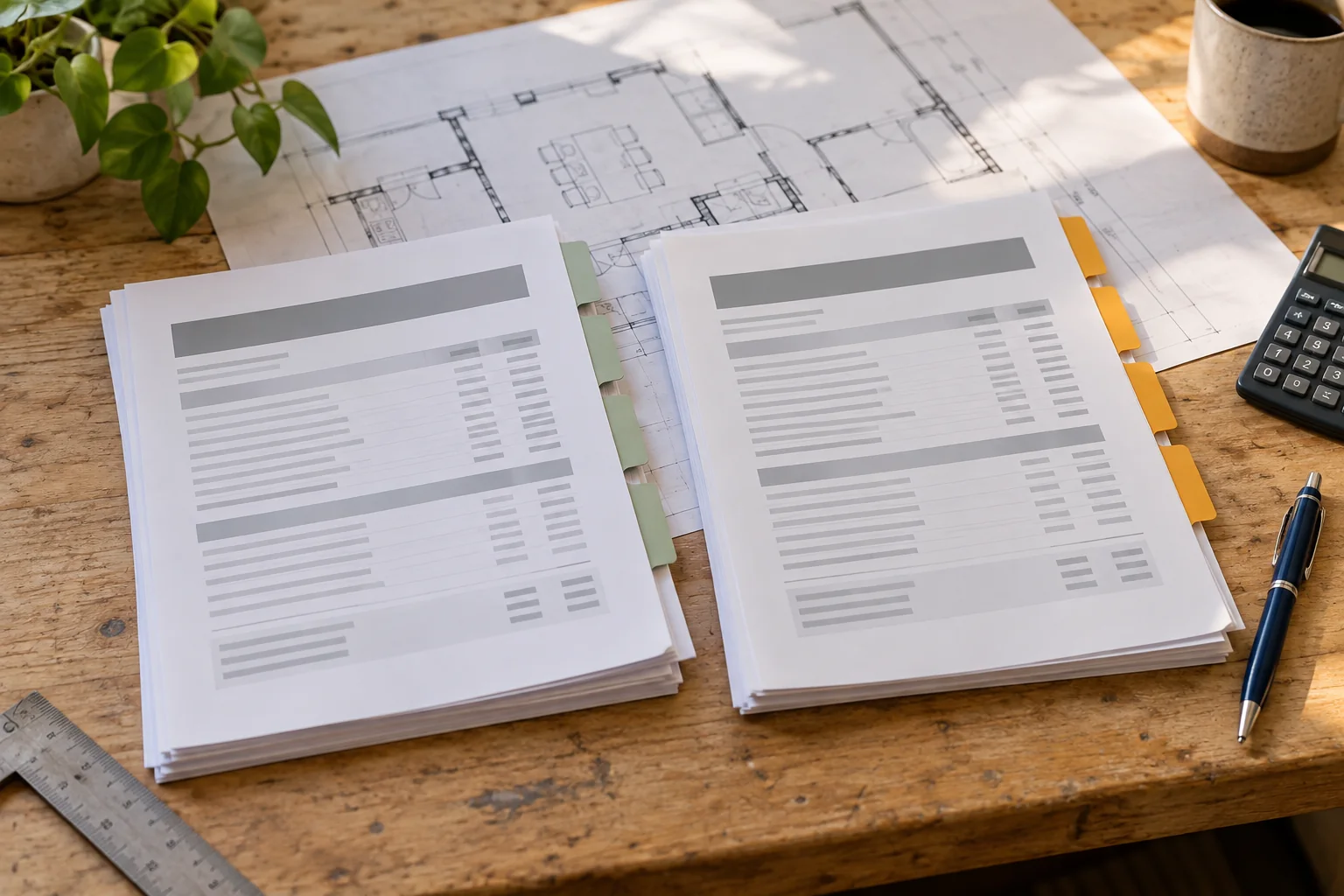
One contractor prices opening the floor, installing the pipe and replacing the tile. The other lists only “install plumbing.” The difference could be the price of the work or the work each bidder has priced.
What to check
- Common basis: confirm each bidder received the same drawings, equipment list and changes.
- Connecting work: locate disposal after demolition, floor restoration after plumbing, and connections and startup after installation.
- Price status: mark included, excluded, allowance or unverified. An allowance is a provisional amount for a specified item; confirm its scope and adjustment method.
- Owner-supplied items: assign delivery, storage, installation and connections, even when you buy the item yourself.
Why it matters
Entering zero for an unanswered cost makes a bid look cheaper without making it complete. Leave the item unverified and request an answer. An exclusion may already belong to another contractor, so an exclusion alone does not make a bid bad.
Questions to ask
Ask each bidding contractor
- Does this line cover purchasing, installation, connections and restoration of adjacent finishes?
- What is the allowance based on, and how is a changed selection reconciled?
- Is the blank item excluded, included elsewhere or still awaiting information?
Your next step
Start with one task described differently in the two bids. Send the same question to both contractors and keep the dated replies. Compare totals again after receiving revised scope and pricing.